
The Alberta Separation Referendum Question
On October 19, 2026, Albertans will be asked a direct question about the province's future in Confederation. Here is the official wording, what it actually does and doesn't do — and why the Alberta Freedom Foundation is asking Albertans to vote for Option 2.
This page is a personal opinion essay. It is written from the author's own point of view and does not claim to be neutral analysis. It is presented here as one side of an actively contested public debate.
Development of this website was funded by the Alberta Freedom Foundation. See our Transparency & Disclosures page for more.
“Should Alberta remain a province of Canada, or should the Government of Alberta commence the legal process required under the Canadian Constitution to hold a binding provincial referendum on whether or not Alberta should separate from Canada?”
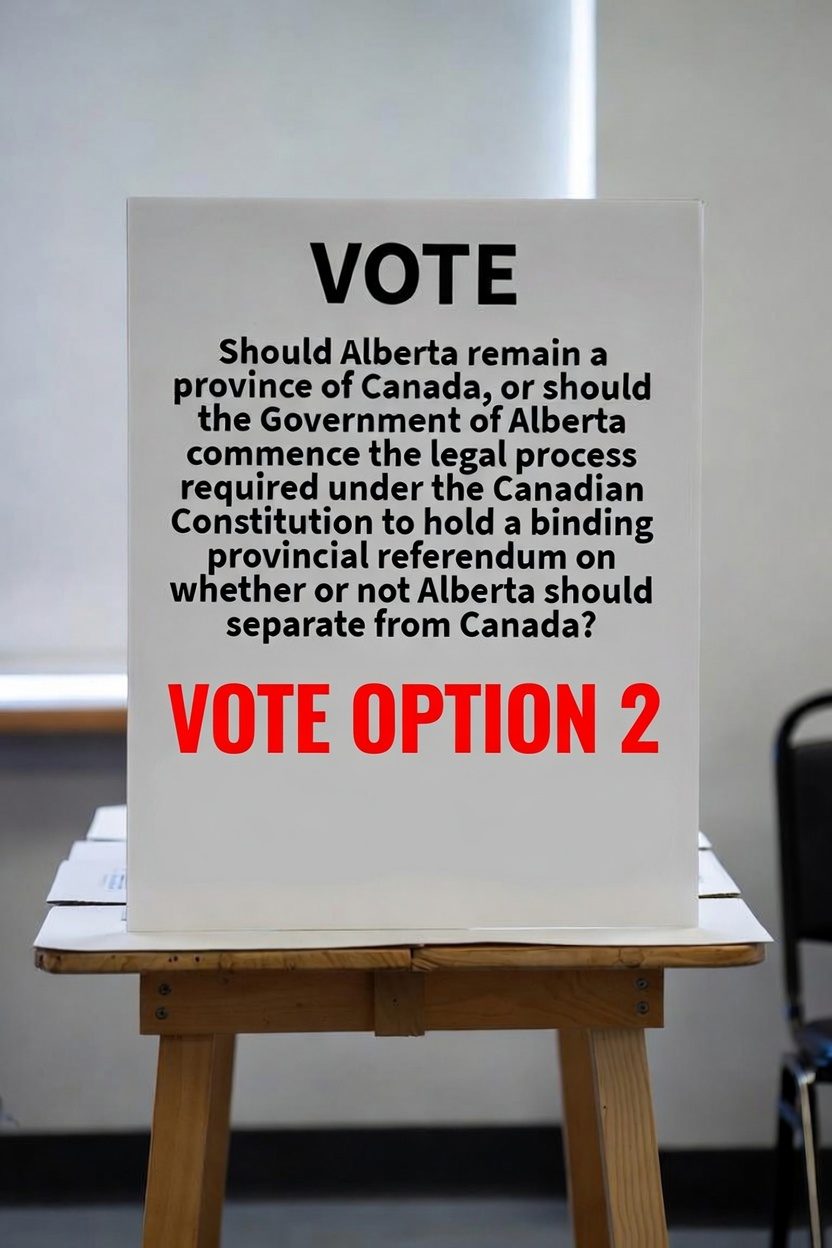
What A Yes Vote On Option 2 Actually Does
This question does not separate Alberta from Canada. It does not hold a binding independence vote. What it does is simpler, and worth being precise about: a majority for Option 2 directs the Alberta government to begin the legal steps the Canadian Constitution requires before a future, separate, binding referendum on separation could be held. A Yes here is a vote to start a process — not a vote to leave.
That distinction matters, and we'd rather Albertans vote informed than surprised. Here's a closer look at some of the claims circulating about this question.
A note on sourcing. The ballot wording above is quoted from Order in Council O.C. 160/2026 as published by Elections Alberta. Details on the legal background, court rulings, and citizen petitions are drawn from public reporting, cited where relevant. This is a fast-moving situation; if a detail on this page becomes outdated, please let us know.
Why We're Asking Albertans To Vote Yes On Option 2
We think starting this process is the right call — not because separation is guaranteed or even necessarily the final outcome, but because Albertans deserve the chance to have this conversation through a real, structured, constitutional process instead of having it argued past them indefinitely.
A Process, Not A Verdict
Voting for Option 2 doesn't lock Alberta into anything. It opens a legal door that a later, binding referendum would still have to walk through — with its own vote, its own debate, and its own result.
Leverage, Even Without A Final Vote
A strong Yes result sends Ottawa an unmistakable signal about how seriously Alberta takes equalization, energy policy, and federal overreach — the kind of signal that's hard to ignore at the negotiating table.
Hundreds Of Thousands Already Asked For This
This question exists because citizen petitions gathered hundreds of thousands of signatures asking for exactly this kind of vote. Voting Yes respects that effort instead of letting it disappear into legal limbo.
The Status Quo Isn't Neutral
A No vote isn't a pause button — it's a vote to keep things exactly as they are: the same equalization formula, the same federal energy posture, the same seat at the table Alberta's had for years. If that arrangement isn't working, voting No doesn't fix it.
What Happens If Option 2 Wins
We'd rather be straightforward about the road ahead than oversell it. Here's the realistic sequence of what a Yes result on Option 2 sets in motion:
The Government Responds To The Mandate
Because the result is non-binding, the Alberta government would still need to decide, politically, how far to act on it. A decisive Yes majority makes that decision much harder to ignore.
Proper Consultation With First Nations
Given the May 2026 court ruling on this exact point, any further step toward a binding referendum would need to genuinely address treaty-rights consultation — not route around it. We think that's a precondition, not an obstacle.
Legal Groundwork For A Binding Question
The government would need to design a referendum question that meets the standard set by the federal Clarity Act and the Supreme Court's secession reference — clear, unambiguous, and capable of supporting a real negotiation if it passes.
A Future Binding Referendum
Only at that point would Albertans face an actual binding vote on separation itself. That vote, not this one, would be the real fork in the road — and it would come with its own campaign, its own debate, and its own decision.
In short: voting Yes on Option 2 keeps Alberta's options open. Voting No closes that door for now. We think Albertans should get to walk through it before deciding what's on the other side.
Mark Option 2 On Question 10
Bring your ID, find your polling place through Elections Alberta, and vote on all ten questions — starting with this one.